Qi2 is the latest wireless charging standard that brings magnetic alignment and better efficiency to phones and accessories. It builds on the original Qi standard that has powered wireless charging for years, but adds a magnetic ring similar to Apple’s MagSafe technology. The Wireless Power Consortium developed Qi2 to create a universal charging experience across different brands and devices.
If your current wireless charger works fine and you don’t have a Qi2-compatible device, you probably don’t need to upgrade right away. Qi2 chargers work with older Qi devices, but some older chargers may not work with newer Qi2 phones. The standard promises faster 15-watt charging speeds with proper magnetic alignment, and a new 25-watt version is starting to appear in 2026.
Your decision to upgrade depends on what devices you own and how important faster, more reliable wireless charging is to you. This guide will walk you through how Qi2 works, what devices support it, and whether investing in new charging accessories makes sense for your situation.
Understanding the Qi2 Standard
The Wireless Power Consortium developed Qi2 as the latest version of wireless charging technology, introducing magnetic alignment and improved efficiency standards. This new standard addresses the main problems with earlier Qi versions while setting stricter certification requirements.
Role of the Wireless Power Consortium
The Wireless Power Consortium (WPC) is the organization that creates and maintains the Qi wireless charging standards. Since launching the original Qi standard in 2010, the WPC has certified over 13,000 products in the market today.
The WPC sets the technical specifications that manufacturers must follow. They work with independent testing laboratories around the world to verify that products meet safety and performance requirements. When you see the Qi or Qi2 logo on a product, it means the WPC has approved it through their testing process.
The organization includes major technology companies as members. These companies help shape future versions of the standard to ensure it meets real-world needs.
How Qi2 Differs From Previous Standards
Qi2 introduced magnetic attachment technology that wasn’t part of earlier Qi standards. Your phone and charger now align perfectly through built-in magnets, which solves the common problem of devices shifting out of position during charging.
Key improvements in Qi2:
- Magnetic alignment for consistent placement
- 15W charging speed as standard
- Better energy efficiency through proper alignment
- Qi2 25W (version 2.2.1) launched in July 2025 with nearly 70% more power
The original Qi standard couldn’t guarantee proper alignment. You might place your phone on a charging pad and wake up to find it barely charged because it moved slightly. Qi2 eliminates this issue entirely.
Key Features of Magnetic Power Profile (MPP)
The Magnetic Power Profile (MPP) is the core technology that defines Qi2. This profile uses magnets to create a physical connection between your device and charger.
MPP ensures your phone sits at the exact right spot every time. The magnets work from up to 4 cm away, pulling your device into the correct position automatically. This alignment creates a more efficient energy transfer than previous standards.
The magnetic system also opens up new possibilities. You can use accessories that attach magnetically to the back of your phone while it charges. AR/VR headsets and other devices can now take advantage of this magnetic connection.
MPP reduces wear on your phone’s charging port. You don’t need to plug in cables repeatedly, which means your charging port lasts longer and you generate less electronic waste from broken cables.
The Qi2 Certification Process
Products must pass rigorous testing before they can display the Qi2 logo. Independent authorized testing laboratories conduct these tests to verify safety and interoperability.
The certification process checks multiple factors. Your charger must meet specific power delivery standards, magnetic strength requirements, and safety protocols. The testing ensures that any Qi2-certified phone works with any Qi2-certified charger.
Only products that complete this certification can legally display the Qi2 logo. When you buy a product with this logo, you know it has been tested for safety and will work as expected with your other Qi2 devices.
The WPC maintains strict control over certification. This ensures that products labeled as Qi2 actually meet the standard’s requirements rather than just claiming compatibility.
Core Technologies Behind Qi2 Wireless Charging
Qi2 relies on four key technologies that work together to deliver safe and efficient wireless charging. The Magnetic Power Profile ensures proper alignment, electromagnetic induction transfers power, advanced heat management keeps temperatures safe, and foreign object detection prevents charging hazards.
Magnetic Alignment and Attachment
The Magnetic Power Profile (MPP) is the foundation of Qi2 technology. This system uses magnets built into both your phone and charger to snap them together in the exact right position.
When you place your device near a Qi2 charger, the magnets automatically pull it into perfect alignment. This magnetic locking ensures the charging coils line up correctly every time.
The magnetic attachment solves a major problem with older wireless chargers. Without magnets, even a small misalignment could waste energy or slow down charging. Qi2’s magnetic alignment delivers consistent power transfer because your device stays in the optimal position.
Electromagnetic Induction Explained
Qi2 uses electromagnetic induction to move power from the charger to your device without any physical connection. The charger contains a coil that creates a magnetic field when electricity flows through it.
Your device has its own charging coil that sits inside the case. When the magnetic field from the charger reaches this coil, it generates an electrical current that charges your battery.
The magnetic alignment from MPP makes this process more efficient. When the coils line up perfectly, more energy transfers successfully instead of being lost as heat.
Heat Management and Efficiency
Qi2 includes built-in temperature monitoring to prevent overheating during charging. The charger and device communicate constantly to track heat levels and adjust power delivery.
If temperatures rise too high, the system automatically reduces charging speed. This protects your battery and prevents damage to internal components.
Better charging efficiency also means less wasted energy. The magnetic alignment helps achieve efficiency rates above 85% compared to older wireless charging methods. Less wasted energy means less heat generation and faster charging times.
Foreign Object Detection and Device Safety
Foreign object detection is a critical safety feature that scans for metal objects between your device and charger. Items like keys, coins, or paper clips can heat up dangerously if caught in the charging field.
Before power transfer begins, the system sends test signals to check what’s present. If it detects anything that shouldn’t be there, charging stops immediately.
This technology protects you from potential fire hazards and prevents damage to your devices. The system runs continuous checks during charging to ensure nothing slides into the charging area after the process starts.
Qi2 Wireless Charging Performance
Qi2 wireless charging delivers 15W of power with magnetic alignment that improves efficiency and speed, while the newer Qi2 25W standard (also called Qi2.2) pushes charging speeds even higher with nearly 70% more power output.
Charging Speed and Power Output
Standard Qi2 chargers deliver 15W of power to your device. This is a significant step up from older Qi charging, which often struggled to maintain consistent speeds due to misalignment between the charging coil in your phone and the charger pad.
Qi2 25W chargers can now provide up to 25W of power output. Your phone can charge from 0 to 50% in about 30 minutes with this faster standard. However, your device needs to support Qi2 25W to take advantage of these speeds.
Keep in mind that charging speed varies throughout the charging cycle. Your phone charges fastest when the battery is empty and the device is cool. As your battery fills up or your phone heats up, charging speed slows down automatically to protect your device.
Energy Efficiency Improvements
The magnetic alignment system in Qi2 chargers makes wireless charging more energy efficient. When your phone and charger connect magnetically, the charging coils line up perfectly every time. This means less energy gets wasted as heat.
Older Qi chargers without magnets lost power when devices weren’t positioned correctly. You might have placed your phone on a charging pad only to find it barely charged hours later. Qi2 solves this problem by ensuring proper alignment automatically.
Better energy efficiency also means your charger uses less electricity from the wall. The improved connection between your device and charger converts more of that electricity into actual battery charge instead of heat.
Impact on Battery Health
Qi2 charging is designed to be safe for your battery over the long term. The magnetic alignment reduces excess heat generation, which is one of the main factors that can degrade battery health over time.
Your phone manages charging speeds based on temperature and battery level. When your device detects it’s getting too warm, it automatically reduces power delivery to protect the battery. This built-in safety feature works with both 15W and Qi2 25W charging.
Qi2 chargers also eliminate wear on your phone’s charging port. Physical charging cables create mechanical stress each time you plug and unplug them. This stress can damage the port over time, but wireless charging avoids this issue entirely.
Fast Wireless Charging and Power Delivery
Fast wireless charging with Qi2 requires both your phone and charger to support the standard. If you have a Qi2 25W charger but your phone only supports 15W, you’ll charge at the lower speed.
Power delivery adjusts automatically based on your device’s capabilities and needs. Your charger communicates with your phone to determine the optimal charging speed at any given moment.
The certification process for Qi2 products ensures they meet strict safety and interoperability standards. Only products that pass testing at independent labs can display the Qi2 logo. This means certified Qi2 chargers work safely with any Qi2-compatible device, regardless of manufacturer.
Device Compatibility and Interoperability
Qi2 devices work across different brands and manufacturers, but getting the fastest charging speeds requires matching Qi2-certified products. Older Qi devices and newer Qi2 chargers can work together, though often at reduced power levels.
Qi2-Certified Devices and Qi2-Ready Phones
Qi2-certified devices have passed testing for safety and interoperability at independent labs. Only these products can display the official Qi2 logo. The iPhone 12 and newer models work with Qi2 chargers because they include magnetic alignment technology similar to MagSafe.
Several Android phones now support Qi2 natively. The Google Pixel 10 and Pixel 10 Pro XL include built-in Qi2 certification. The Samsung Galaxy S25 also features native Qi2 support with magnetic alignment.
To get full Qi2 benefits and speeds, you need both a Qi2 phone and Qi2 charger. When you pair Qi2-certified products together, you get the proper magnetic alignment and optimal charging speeds up to 15W. Qi2 25W devices can charge even faster when paired with compatible Qi2 25W chargers.
Backward Compatibility With Qi and MagSafe Devices
Backward compatibility between Qi and Qi2 devices exists but with limitations. When you place an older Qi phone on a new Qi2 charger, the charger offers its magnetic power profile. If your phone doesn’t recognize it, charging drops to 5W instead of higher speeds.
The same happens in reverse. A Qi2 phone on an older Qi wireless charger will charge, but you won’t get the magnetic alignment benefits or faster speeds.
MagSafe accessories and chargers work with Qi2 devices because Qi2 uses similar magnetic alignment technology. Your existing MagSafe chargers will work with Qi2-ready phones. However, older Qi chargers without magnets won’t provide the alignment benefits that improve charging efficiency.
Android vs. iPhone Wireless Charging Support
iPhone models from the iPhone 12 forward work with Qi2 chargers right away. These phones already have the magnetic rings needed for proper alignment. You don’t need any special cases or adapters.
Most Android phones require a Qi2-compatible case to work with Qi2 chargers. Brands like Samsung and Google have started adding native Qi2 support in their newest models. The Pixel 10 line and Galaxy S25 include built-in Qi2 certification without needing extra accessories.
Older Android phones can still charge on Qi2 chargers, but they drop to 5W speeds. If you want faster charging on an older Android device, you’ll need to use a magnetic case designed for Qi2 compatibility.
Case, Charger, and Accessory Requirements
You need a Qi2-certified wireless charger to take advantage of Qi2 features. Standard Qi wireless chargers won’t provide magnetic alignment or the improved efficiency of Qi2.
Qi2 compatibility requires the right combination of products:
- Qi2-certified phone + Qi2 charger = Full speed magnetic charging
- Older phone + Qi2 case + Qi2 charger = Magnetic alignment and better speeds
- Any Qi phone + Qi2 charger without case = 5W charging only
Cases matter for wireless charging performance. Thick cases can block charging even with Qi2 devices. Look for cases specifically labeled as Qi2-compatible or MagSafe-compatible.
Magnetic accessories designed for MagSafe work with Qi2 devices. Wallets, grips, and mounts that attach magnetically will function with Qi2-ready phones. The magnetic ring placement follows the same standard across both systems.
Qi2 Accessories and Use Cases
Qi2 accessories are expanding beyond basic charging pads to include power banks, car mounts, and versatile stands that work across iPhone and Android devices. Companies like Anker, Belkin, and Baseus are leading the charge with certified products that promise reliable magnetic alignment and faster charging speeds.
Wireless Charging Pads and Stands
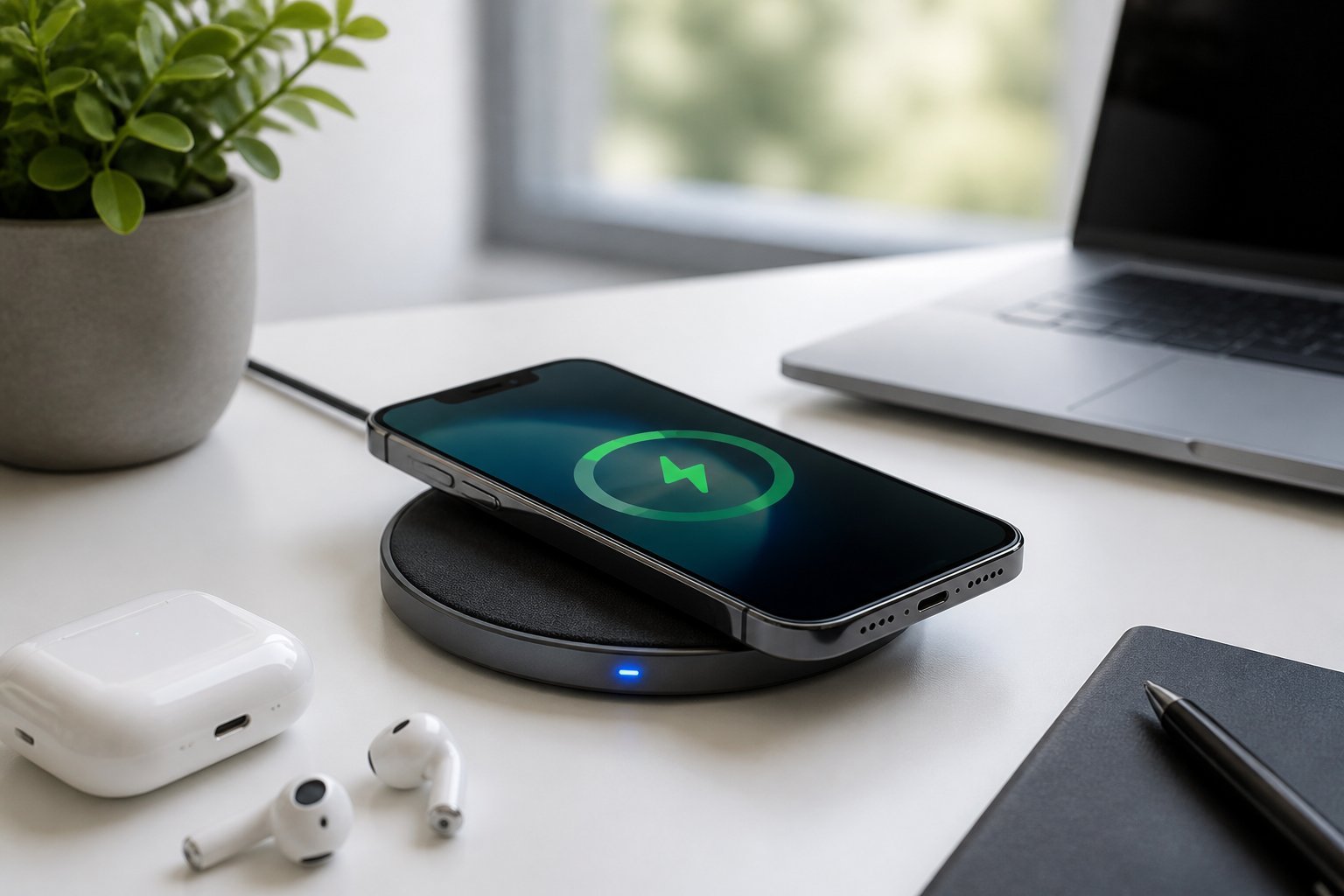
Qi2-certified chargers come in two main forms: flat charging pads and angled stands. The charging pad design works well on nightstands or desks where you want to lay your phone flat. Wireless charging stands offer a better viewing angle for video calls or checking notifications while your device powers up.
The magnetic alignment built into Qi2 accessories ensures your phone snaps into the correct position every time. You don’t need to fumble around to find the sweet spot like older Qi chargers required. This precise positioning also means less energy gets wasted as heat, making charging more efficient.
Anker’s Maggo Qi2 line includes several stand options that deliver the full 15 watts of charging power. Belkin and Nomad also make reliable Qi2 chargers that work with both iPhones and compatible Android phones. The newer Qi2 25-watt accessories are starting to hit the market, though only the Pixel 10 Pro XL can take advantage of that speed right now.
Power Banks and On-the-Go Charging
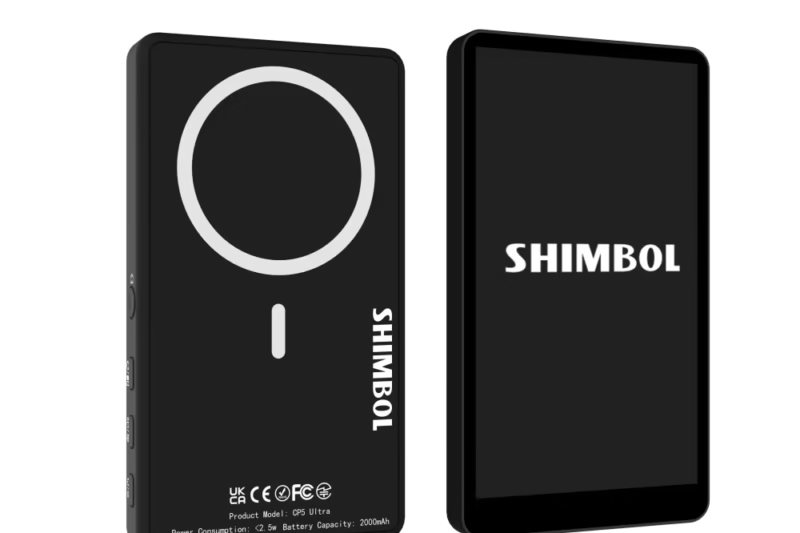
Qi2 power banks solve the cable problem when you’re away from outlets. These wireless power banks stick magnetically to the back of your phone, letting you charge while you use your device. You can slip them in a pocket or bag without worrying about loose cables.
Most Qi2 power banks deliver 15 watts of charging power, which matches what you get from wall-mounted Qi2 chargers. The magnetic connection stays secure even when you’re walking or moving around. Anker, Baseus, and Aukey all manufacture Qi2 power banks that work with certified phones.
Battery capacity matters when choosing a power bank. Models typically range from 5,000 to 10,000 mAh, giving you one to two full charges depending on your phone’s battery size. Some power banks include kickstands or additional USB ports for charging multiple devices.
Car Mounts and Vehicle Integration
Car mounts with Qi2 support let you charge your phone while using navigation apps. The magnetic attachment keeps your device secure even on bumpy roads. These mounts typically clip onto your air vent or stick to your dashboard with adhesive or suction cups.
Scosche makes Qi2-certified car mounts that charge at 15 watts while holding your phone in place. The magnetic connection is strong enough that you don’t need additional clamps or grips. You can attach and remove your phone with one hand, making it safer than fiddling with traditional mounts.
Some car mounts include adjustable arms or ball joints so you can position your phone at the best viewing angle. The newest Qi2 25-watt car chargers are also becoming available, though you need a compatible phone to benefit from the faster speeds.
Emerging Accessories and MagSafe Compatibility
Qi2 charging accessories now extend to 3-in-1 charging stations that power your phone, earbuds, and smartwatch simultaneously. These multi-device chargers reduce cable clutter on your desk or nightstand. You can charge all your daily devices from a single power source.
MagSafe accessories designed for iPhones generally work with Qi2 phones because the magnetic arrays are compatible. This means the existing ecosystem of MagSafe wallets, grips, and stands can work with newer Android devices that support Qi2. However, older Qi chargers without magnets may not work reliably with some Qi2 phones.
For Samsung’s Qi2-Ready phones, you need to buy a special case with magnets built in before you can use Qi2 charging accessories. Samsung and third-party makers sell these cases for the Galaxy S25 series and Z Fold7 and Flip7 models. Once you add the case, your phone works like any other Qi2 device with full magnetic charging capabilities.
Should You Upgrade to Qi2?
The decision to upgrade depends on your current phone and charging setup. Qi2 wireless charging brings real improvements in efficiency and speed, but not everyone needs to rush out for new accessories right away.
Comparing Qi, MagSafe, and Qi2 For Everyday Use
The original Qi standard offers basic wireless charging without magnets. You place your phone on a charging pad, but if it’s not aligned correctly, charging slows down and your device gets warm. This wastes energy and can hurt your battery’s health over time.
MagSafe introduced magnetic alignment for iPhones starting with the 12 series. The magnets snap your phone into the perfect position every time. This means faster charging at 15 watts and less wasted energy.
Qi2 wireless charging takes the best parts of MagSafe and makes them available to all phones. It uses the same magnetic system through its Magnetic Power Profile. The key difference is that Qi2 is an open standard. Any phone maker can use it without paying Apple licensing fees.
For daily use, magnetic alignment makes a bigger difference than you might think. Your phone charges faster, runs cooler, and the battery stays healthier. You can also use magnetic accessories like car mounts and wallet attachments that work across different phone brands.
When a New Charger Is Required
You need a new Qi2-certified charger if you want the full benefits of the standard. Your old Qi charger might work with newer phones, but results vary. Some Qi2 phones, like the HMD Skyline, don’t charge at all with older Qi pads.
If you have an iPhone 12 or newer, you can keep using your MagSafe chargers. They work fine with Qi2 devices. Most Qi2 chargers also charge older Qi phones, just at slower speeds.
Look for the Qi2 logo on new chargers. This means the product passed the Wireless Power Consortium’s certification process. Certified chargers meet strict standards for magnet strength, charging speed, and safety features.
You don’t need new cables or wall adapters. Qi2 chargers plug into the same USB-C or USB-A ports you already have. The magnetic charging pad is the only new piece you need.
Future Developments and Qi2.2
Qi2.2, branded as Qi2 25W, arrived in early 2025. This update doubles the charging speed from the original Qi2 standard. The specification actually supports up to 50 watts, but most products currently max out at 25 watts.
The Google Pixel 10 Pro XL is the first phone that supports Qi2 25W charging. Other Pixel 10 models support regular Qi2 at 15 watts. More Android phones will likely add 25-watt support throughout 2026 and beyond.
Qi2.2 improves magnetic alignment even further. This ensures phones charge at maximum speed and efficiency. The update also maintains backward compatibility, so Qi2 25W devices still work with older Qi2 and Qi chargers.
The certification process for Qi2 25W is already underway. Companies like Anker, Belkin, Baseus, and Ugreen have released certified 25-watt chargers and power banks. Hundreds more products are waiting for approval.
What to Look for in a Qi2-Certified Charger
Check for official Qi2 certification before you buy. The Qi2 logo guarantees the charger meets the consortium’s standards. Uncertified chargers might claim Qi2 compatibility but could deliver slower speeds or damage your device.
Consider the charging speed you need. Standard Qi2 chargers provide 15 watts, which charges most phones in 2-3 hours. Qi2 25W chargers cut that time roughly in half for compatible devices.
Key features to evaluate:
- Magnet strength: Strong magnets keep your phone secure, even on angled stands or car mounts
- Heat management: Good chargers include cooling systems to prevent overheating
- Foreign object detection: This safety feature stops charging if it detects metal objects like keys or coins
- Multiple coils: More coils mean better charging even if your phone shifts slightly
Form factor matters too. Flat pads work well on desks and nightstands. Stands let you see your screen while charging. 3-in-1 chargers handle your phone, watch, and earbuds at once. Power banks give you portable magnetic charging when you’re away from outlets.
Price ranges vary widely. Basic Qi2-certified charging pads start around $30. Premium 3-in-1 stands with Qi2 25W support can cost $100 or more.

- 3-IN-1 FAST CHARGING — Power your iPhone, Apple Watch, and AirPods simultaneously with a MagSafe-compatible, Qi2-certified charging dock – engineered for fast, effortless alignment and refined simplicity.
- POWER, PERFECTED — Experience next-gen wireless charging with Qi2-certified 15W fast charging for iPhone, 5W for Apple Watch (MFi-certified), and 5W for AirPods or any Qi-compatible device.
- EVERYTHING IN ITS PLACE — Align, charge, and organize your iPhone, Apple Watch, and AirPods in one refined charging station – no cables, no clutter. Built for perfect placement and ready for Nightstand mode.
- BRILLIANTLY BALANCED — Crafted from a precision die-cast metal chassis and weighted for rock-solid stability, it anchors your devices – making every magnetic connection feel smooth, secure, and effortless.
- DESIGNED TO ELEVATE — With a compact footprint and sculpted form, it brings visual clarity to any space – purposefully refined, intentionally designed, and thoughtfully built to belong anywhere.